Winner • National Ideathon • 54th Annual Convention of ISTE 14 February 2025 | Lamrin Tech Skills University Punjab
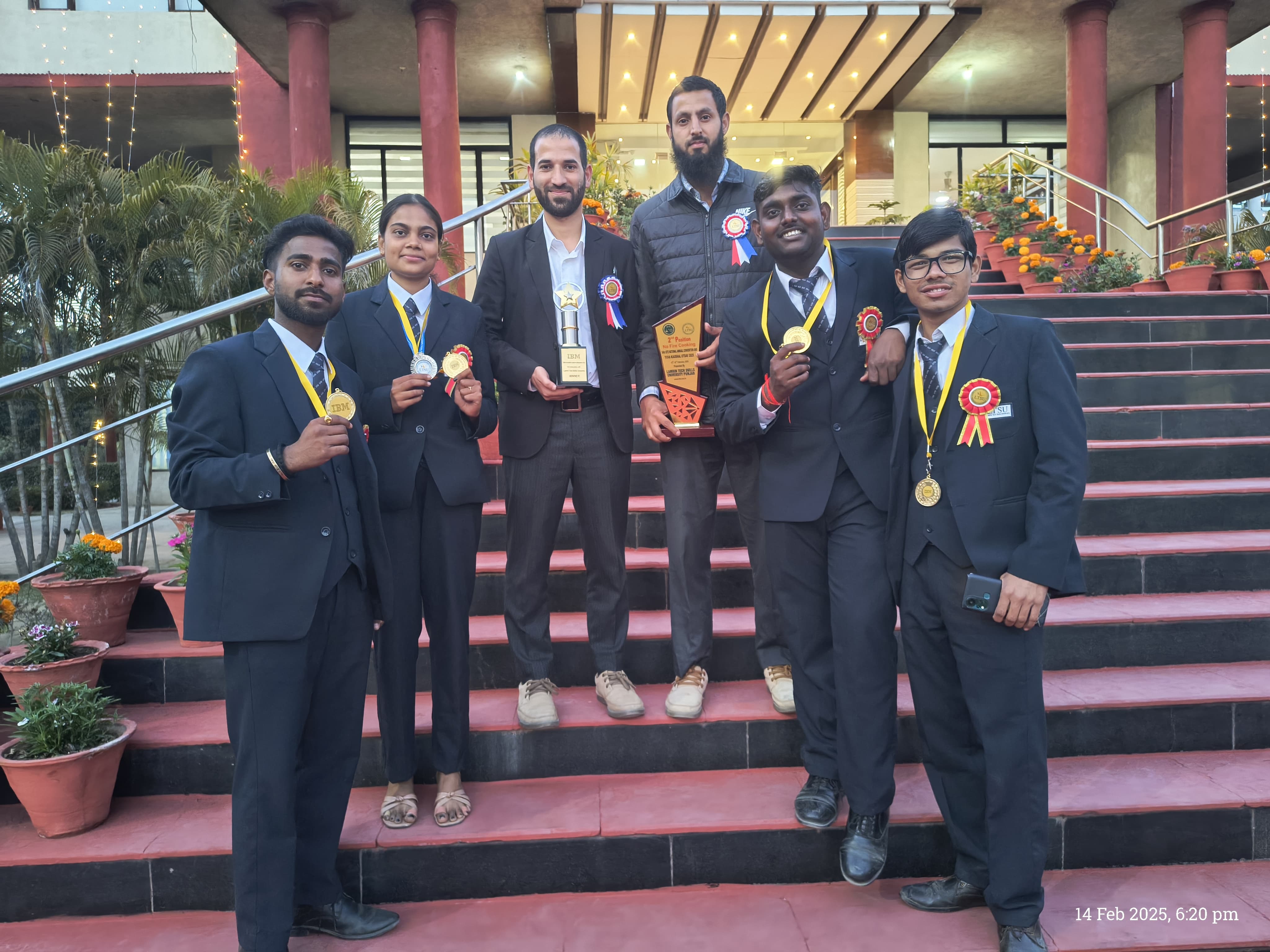
Team Path-Finders with the winning trophy during the ISTE convention.
A Win That Started with a Real-World Problem
Some competitions are about proving what you already know. Others challenge you to imagine what technology could do for people whose everyday problems are very different from those inside a classroom or laboratory. The National Ideathon held during the 54th Annual Convention of the Indian Society for Technical Education (ISTE) at Lamrin Tech Skills University Punjab was one of those experiences for our team, Path-Finders.
On 14 February 2025, we had the opportunity to present Farmer Sakha, our intelligent agriculture solution designed around a simple but important objective: bring useful technology closer to the farmer and help turn scattered agricultural information into practical, timely decisions. Competing in an ideathon at a national-level technical convention was already an exciting opportunity. Winning the ideathon made the experience even more memorable.
For us, the trophy was not just recognition for a presentation. It represented the journey of identifying a meaningful problem, combining different technologies into one solution, working as a team, defending our idea, and demonstrating how an engineering concept can be designed around the needs of real users.
The Idea Behind Farmer Sakha
Agriculture is increasingly influenced by factors that are difficult for an individual farmer to monitor continuously. Soil moisture, nutrient levels, crop health and weather conditions can all affect productivity. Making decisions about irrigation, fertilizer, sowing and crop protection often requires information that may not be available at the right time or in an easily understandable form.
Farmer Sakha was conceived as an intelligent digital companion for farmers. The idea was to combine Artificial Intelligence (AI), Internet of Things (IoT), weather forecasting and an accessible multilingual interface into one integrated system. Instead of asking farmers to interact with multiple disconnected tools, Farmer Sakha brings important insights into a single platform.
The central philosophy behind the project was data-driven agriculture. When farmers can access relevant information about their soil, crops and weather at the right time, they can make decisions based on evidence rather than assumptions. This can potentially reduce resource wastage, improve crop health and contribute to more sustainable and resilient farming.
Connecting the Farm to Technology
One of the key components of Farmer Sakha is its simulated IoT-based soil monitoring system. Soil conditions have a direct relationship with plant growth, yet soil moisture and nutrient availability can change over time. The system uses simulated soil sensors to represent the collection of these important parameters.
The purpose of this monitoring is not simply to display sensor values. The information can support practical decisions, such as understanding when irrigation may be required or identifying situations where fertilizer application needs to be optimized. By using data to guide these decisions, the system aims to avoid unnecessary use of water and fertilizers while maintaining healthier growing conditions.
This was an important part of our thinking: IoT becomes meaningful when sensor data is connected to an action. A number on a screen is only useful when the user understands what it means and what decision it can support.
AI-Powered Crop Disease Detection
Another major component of Farmer Sakha is its AI-powered crop disease detection model. Crop diseases can spread quickly and can lead to significant losses when they are not identified at an early stage. Traditionally, disease identification may depend on visual inspection and agricultural expertise, which can be difficult to access consistently.
Our solution explores the use of image processing and machine learning to identify visible signs of crop diseases. A farmer can use an image of a crop or affected plant as input, allowing the system to analyze the image and assist with identifying the likely disease.
The larger objective is early detection. If a potential disease can be recognized sooner, farmers may be able to take preventive or corrective action before the problem spreads across a larger part of the crop. This can help reduce crop losses and improve the quality of agricultural output.
For our team, integrating AI into the project was especially exciting because it demonstrated how machine learning can move beyond academic datasets and become part of a practical user-facing solution. The model was not treated as an isolated AI experiment; it was positioned as one component within a larger agricultural decision-support ecosystem.
Using Weather Intelligence for Better Planning
Agricultural decisions are closely connected to weather. Rainfall, temperature, humidity and other conditions can influence sowing, irrigation and crop management. A farmer may have healthy soil and a healthy crop, but an unexpected weather change can still affect the outcome.
Farmer Sakha integrates the OpenWeather API to provide real-time weather information. This gives the platform an additional layer of context when presenting agricultural insights. Instead of considering soil and crop information independently, the farmer can also consider current and upcoming weather conditions when planning activities.
This integration reflects one of the strongest ideas behind the project: better decisions often come from combining multiple sources of information. Soil data tells us what is happening beneath the crop. Crop analysis tells us what may be happening to the plant. Weather data tells us what environmental conditions may influence the farm. Together, these signals can create a more complete picture.
Designed for the Farmer, Not Just for the Technology
A technically advanced system is not useful if its intended users find it difficult to access or understand. This was one of the important design considerations behind Farmer Sakha.
The project includes a multilingual mobile application intended to make the system accessible to farmers from different regions and language backgrounds. Voice support further improves convenience, especially for users who may prefer speaking over typing or navigating complex interfaces.
This user-centered approach helped us think about technology differently. Building for agriculture is not only about sensors, APIs and machine learning models. It is also about accessibility, simplicity, trust and the ability to translate technical information into something a farmer can understand and act upon.
From an Idea to an Integrated Solution
One of the most challenging and rewarding aspects of Farmer Sakha was bringing multiple technologies together into a coherent idea. AI, IoT, weather APIs, mobile applications and voice-based interaction can each exist as separate projects. Our goal was to show how they could work together around one real-world use case.
The system can be viewed as a chain of information and decisions: sensors provide environmental data, AI helps interpret crop images, weather services provide external conditions, and the mobile application brings these insights to the farmer. The result is a concept for a unified agricultural assistant that supports monitoring, prediction and decision-making.
This integration also gave our team an opportunity to think about scalability. A prototype may begin with simulated sensor data and selected models, but the architecture can eventually be extended to real IoT hardware, more advanced predictive analytics, larger crop and disease datasets, regional languages and more sophisticated recommendation systems.
The 54th Annual ISTE Convention Experience
Presenting Farmer Sakha at the 54th Annual Convention of ISTE made the experience particularly meaningful. The event brought together students, educators, professionals and technology enthusiasts, creating an environment where ideas could be discussed from both academic and practical perspectives.
For our team, presenting at the ideathon meant more than explaining features. We had to communicate the problem, demonstrate why our approach mattered, explain the technology behind it and show how the solution could create impact. This pushed us to refine our pitch and look at the project from the perspective of someone who had never seen it before.
The event also reinforced an important lesson about innovation: the strongest ideas are often those that connect technology with a human need. Farmer Sakha was not designed simply to demonstrate AI or IoT. These technologies were selected because they could contribute to solving specific agricultural challenges.
The Moment We Became the Winners
When Team Path-Finders was announced as the winner of the ideathon, it was an incredibly proud moment. Seeing our team receive the trophy and recognition made all the effort behind Farmer Sakha feel worthwhile.
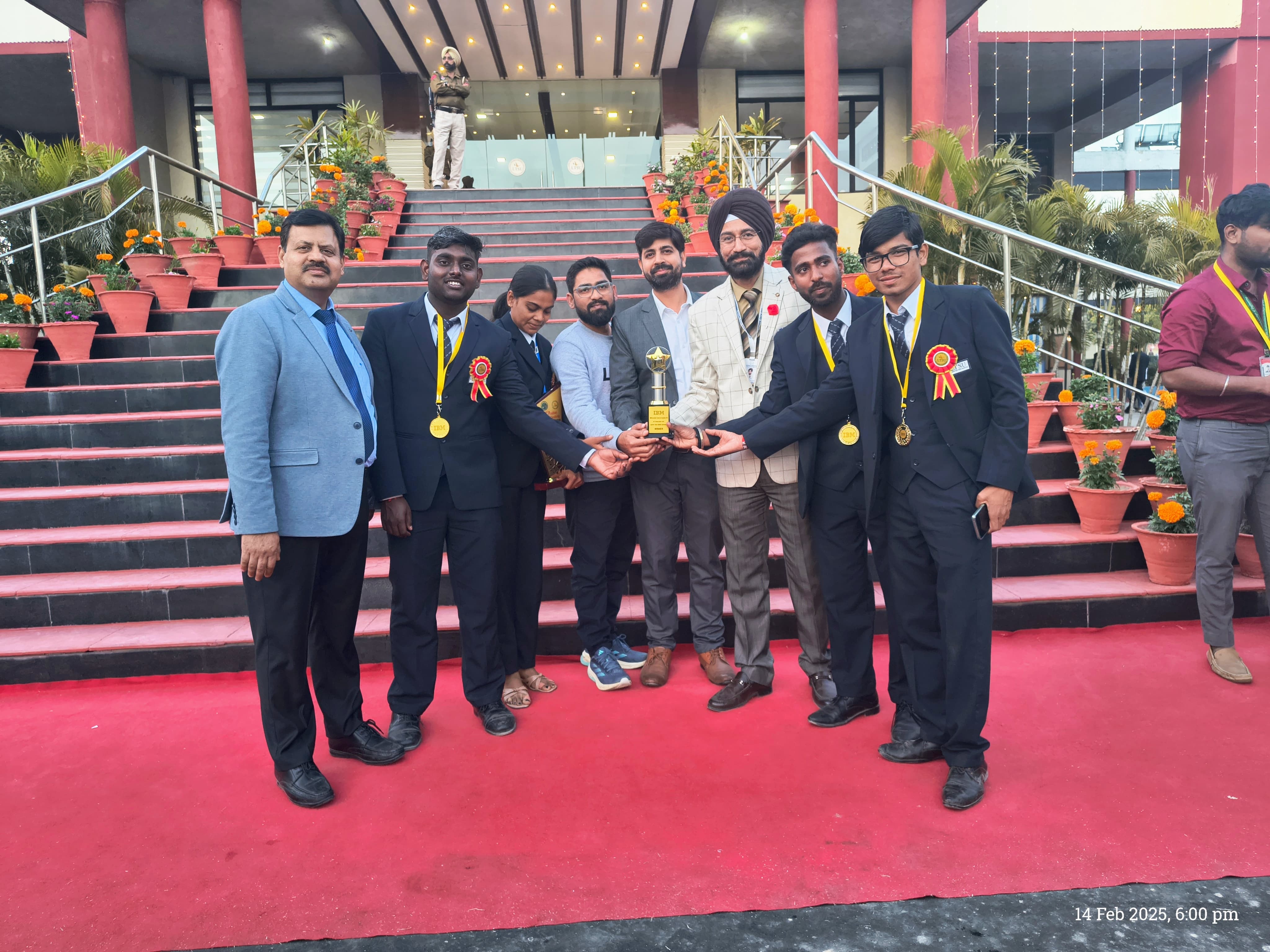
Team Path-Finders celebrating the winning achievement with the Farmer Sakha ideathon trophy.
The photographs from that day capture more than a winning moment. They represent teamwork, mentorship, persistence and the confidence that comes from seeing an idea receive recognition. Standing together with the team and holding the trophy was a reminder that good projects are rarely the result of one person. They emerge from discussions, different perspectives, experimentation and the willingness to keep improving.
What the Experience Taught Me
Winning the ideathon was an achievement, but the learning was equally valuable. The experience taught me that solving a problem requires more than technical knowledge. It requires understanding the user, identifying the most important pain points, selecting appropriate technologies and communicating the solution clearly.
It also strengthened my understanding of interdisciplinary engineering. Farmer Sakha brought together concepts from machine learning, computer vision, IoT, APIs, mobile application development and user experience. Working on such a system showed me how different technical skills can complement one another when they are directed toward a common objective.
Most importantly, the experience strengthened my belief in building technology that has a practical purpose. Whether it is agriculture, transportation or another domain, I want to continue exploring how data and intelligent systems can help people make better decisions.
The Road Ahead for Farmer Sakha
The winning prototype is only a beginning. Farmer Sakha has considerable scope for future development. The simulated IoT layer could be connected to real field sensors. Disease detection could be expanded to support more crops and disease categories. Predictive models could be introduced for yield estimation, irrigation demand and disease risk. Weather intelligence could be combined with historical farm data to generate more personalized recommendations.
The multilingual and voice-enabled interface could also be expanded to support more regional languages and more natural conversational interaction. With a mature data pipeline, the system could eventually evolve from an information platform into a more proactive agricultural decision-support assistant.
The long-term vision is to make advanced technology feel simple at the point where it matters most: in the field. If the farmer can receive the right information, in the right language, at the right time, technology becomes a practical partner rather than a distant concept.
A Milestone for Team Path-Finders
The National Ideathon at the 54th Annual ISTE Convention remains a special milestone in my academic journey. Team Path-Finders entered with an idea for making agriculture smarter and left with the winner's trophy, valuable feedback and a much deeper understanding of what it takes to transform an idea into an impactful solution.
Farmer Sakha represents what we wanted to build: a bridge between technology and the farmer. By combining real-time monitoring, AI-based crop analysis, weather intelligence and an accessible user interface, the project explores how modern engineering can contribute to sustainable, productive and resilient agriculture.
I am grateful to my teammates, faculty members, mentors, organizers and everyone at Lamrin Tech Skills University Punjab who supported us throughout this journey. The victory belongs to Team Path-Finders, but the lessons from the experience will continue to influence the kind of technology we choose to build in the future.
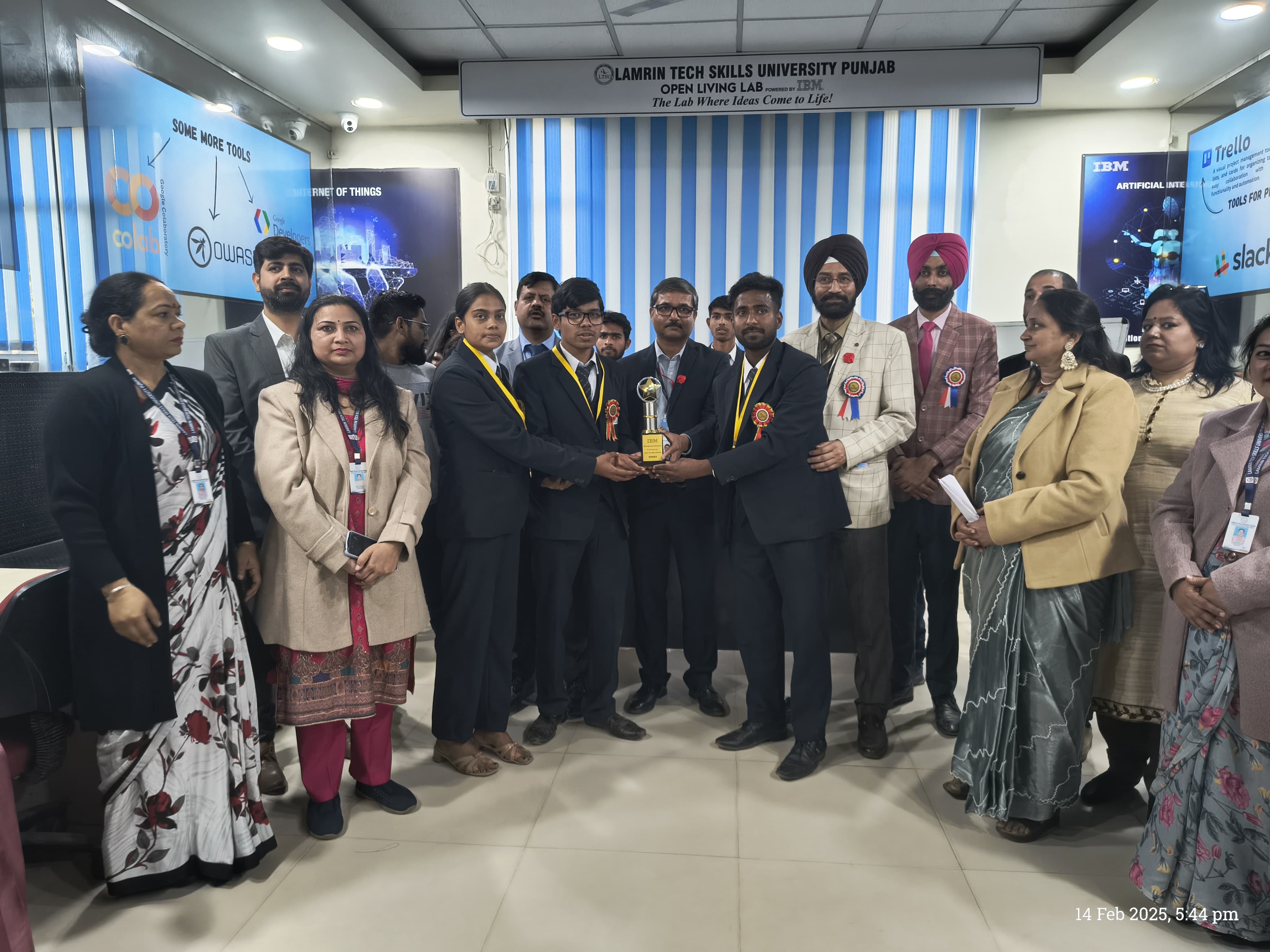
Team Path-Finders with mentors and faculty members after the winning presentation.
Social Links & References
If you want to read more about this event, check out the official posts:
The article presents the Farmer Sakha concept and the team's ideathon experience based on the project information provided for this portfolio entry.