Kochi Metro Project • 2nd Runner-Up • LTSU Internal Hackathon 15 September 2025 | University School of Engineering & Technology (USET), Lamrin Tech Skills University Punjab
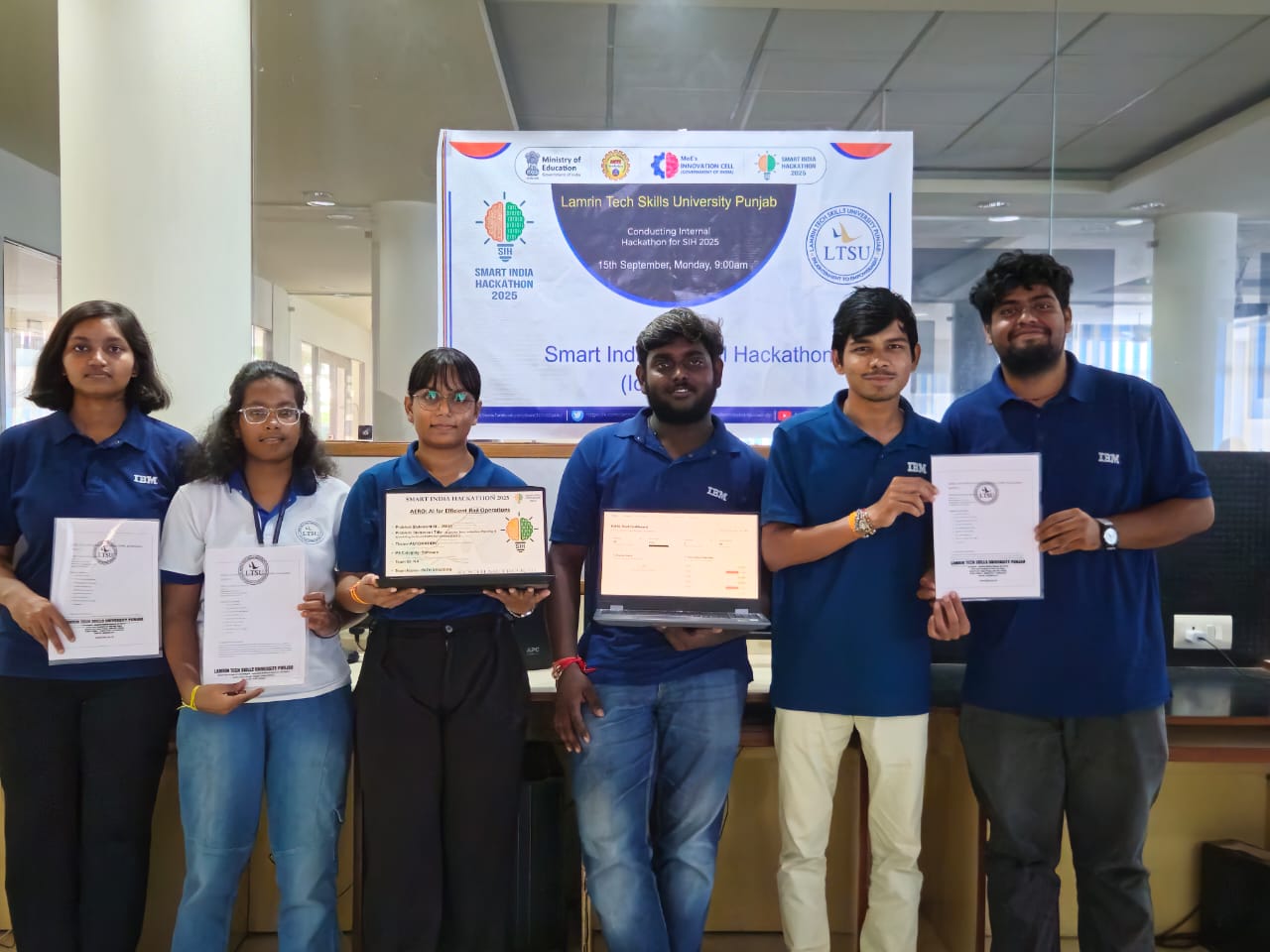
Team Path-Syncers with faculty, mentors and guests after the internal hackathon.
A Day That Turned an Idea into an Achievement
On 15 September 2025, Lamrin Tech Skills University Punjab became a space where engineering, innovation and teamwork came together for Engineers' Day 2025. As part of the celebrations, the University School of Engineering & Technology (USET) organized an Ideathon-cum-Smart India Hackathon Internal Hackathon, bringing together 45 student teams to work on real-world challenges. For our team, Path-Syncers, the day became much more than another college competition. It became an opportunity to take a problem, understand it from an engineering perspective, build a practical solution, defend our approach in front of experienced judges, and learn what it really means to work as a product team.
The result was a moment we will always remember: Team Path-Syncers secured the 2nd Runner-Up position (third place) among the participating teams. Our project was centered around the Kochi Metro, where we explored how technology, data and intelligent operational systems can contribute to a more efficient and better-managed public transportation ecosystem.
The Challenge: Thinking Beyond a Presentation
One of the most valuable parts of a hackathon is that it forces you to move beyond the question, "Can we build this?" and start asking, "Why should this exist, who will use it, and what problem will it solve?" That mindset shaped our approach to the Kochi Metro project.
Public transportation systems are complex. A metro network is not simply a collection of trains and stations; it is a continuously moving ecosystem involving vehicles, routes, schedules, operational teams, maintenance, passengers and large volumes of information. When these elements are not visible through a unified operational view, even small inefficiencies can affect reliability, planning and the passenger experience.
Our idea therefore focused on creating a technology-driven approach for Kochi Metro operations, with particular attention to fleet and operational visibility. Instead of treating transportation data as isolated information, we looked at how it could be organized into a system that supports monitoring, analysis and faster decision-making. The larger vision was to make operational information easier to understand and more useful for the people responsible for keeping the network running smoothly.
Our Kochi Metro Project: Turning Data into Operational Visibility
At the heart of our project was the idea of bringing important metro operational information together in a structured, accessible and actionable way. The project was designed around the Kochi Metro use case rather than as a generic dashboard. This helped us think about real operational questions: What is happening with the fleet? How can operational information be viewed at a glance? How can data help teams identify issues earlier? And how can technology support better decisions without adding unnecessary complexity?
The concept emphasized a centralized view of operational data, where information related to metro assets and fleet activity could be represented in a way that is easier to monitor and analyze. The objective was not simply to display numbers, but to convert raw operational information into meaningful insights. A well-designed system can help decision-makers understand current conditions, recognize patterns, identify exceptions and prioritize actions.
This approach also reflects a broader principle that we carried throughout the project: technology is most valuable when it solves a real operational problem. A visually impressive interface alone is not enough. The system needs to connect the data, the user and the decision. That became one of the key ideas behind our presentation.
From Problem Statement to Prototype
The development journey required us to divide a broad transportation problem into smaller, manageable components. We began with understanding the use case and identifying what information would matter most to an operational stakeholder. From there, we worked on structuring the data, defining the flow of information and shaping the user experience around the decisions the system was expected to support.
One of the biggest lessons was that building a solution for a real-world domain requires domain thinking as much as technical thinking. A developer may naturally focus on databases, APIs, interfaces or algorithms, but a successful solution starts with understanding the workflow. For our team, that meant thinking about how metro operations work, what information needs to be available, and how a user would interpret that information under time pressure.
We also had to balance ambition with the limited time available in a hackathon. The goal was to demonstrate a credible and scalable direction rather than attempt to solve every aspect of metro operations at once. This helped us prioritize the core value proposition and communicate how the solution could evolve into a more comprehensive platform.
The Hackathon Experience
The internal hackathon was as much about collaboration as it was about technology. Working as Team Path-Syncers meant that every stage required coordination—from understanding the problem and refining the idea to building the solution, preparing the presentation and responding to questions.
Hackathons create a unique kind of pressure. There is never enough time to implement every idea, and every new feature competes with testing, refinement and presentation quality. We learned to prioritize. Instead of constantly expanding the scope, we focused on making the core idea understandable and defensible.
Another important lesson was the value of explaining technology in simple terms. During a competition, judges do not only evaluate what has been built; they evaluate whether the team understands the problem, the reasoning behind its architecture, the expected impact and the path toward implementation. Preparing for those questions made us look at our own project more critically and helped us strengthen the story behind the solution.
Presenting Before the Judges
The final presentation was an important test of both our technical understanding and communication skills. We had the opportunity to present our work to esteemed judges, including Dr. Rangarajan P, an L&T expert, and Mr. Lavish Arora, Founder & MD of Race Pvt. Ltd. Their presence added an industry-oriented perspective to the evaluation and made the experience particularly valuable for us as students.
Standing in front of judges and explaining a project that had evolved through intense team discussions taught us an important lesson: confidence comes from clarity. When a team understands its problem, architecture, limitations and future scope, it becomes much easier to communicate the solution naturally. The questions we received also encouraged us to think beyond the prototype and consider how the idea could be made more robust, scalable and useful in a real deployment environment.
The Moment: 2nd Runner-Up
When the results were announced and Team Path-Syncers was recognized as the 2nd Runner-Up, it felt like the culmination of all the late discussions, debugging, design decisions, presentation rehearsals and last-minute improvements. Finishing third among the participating teams was a proud achievement, but the recognition meant more than a position on a leaderboard.
It validated our ability to take a real-world problem and turn it into a structured technology solution. More importantly, it gave us confidence to continue building projects that are not limited to academic demonstrations but are connected to real systems and real users.
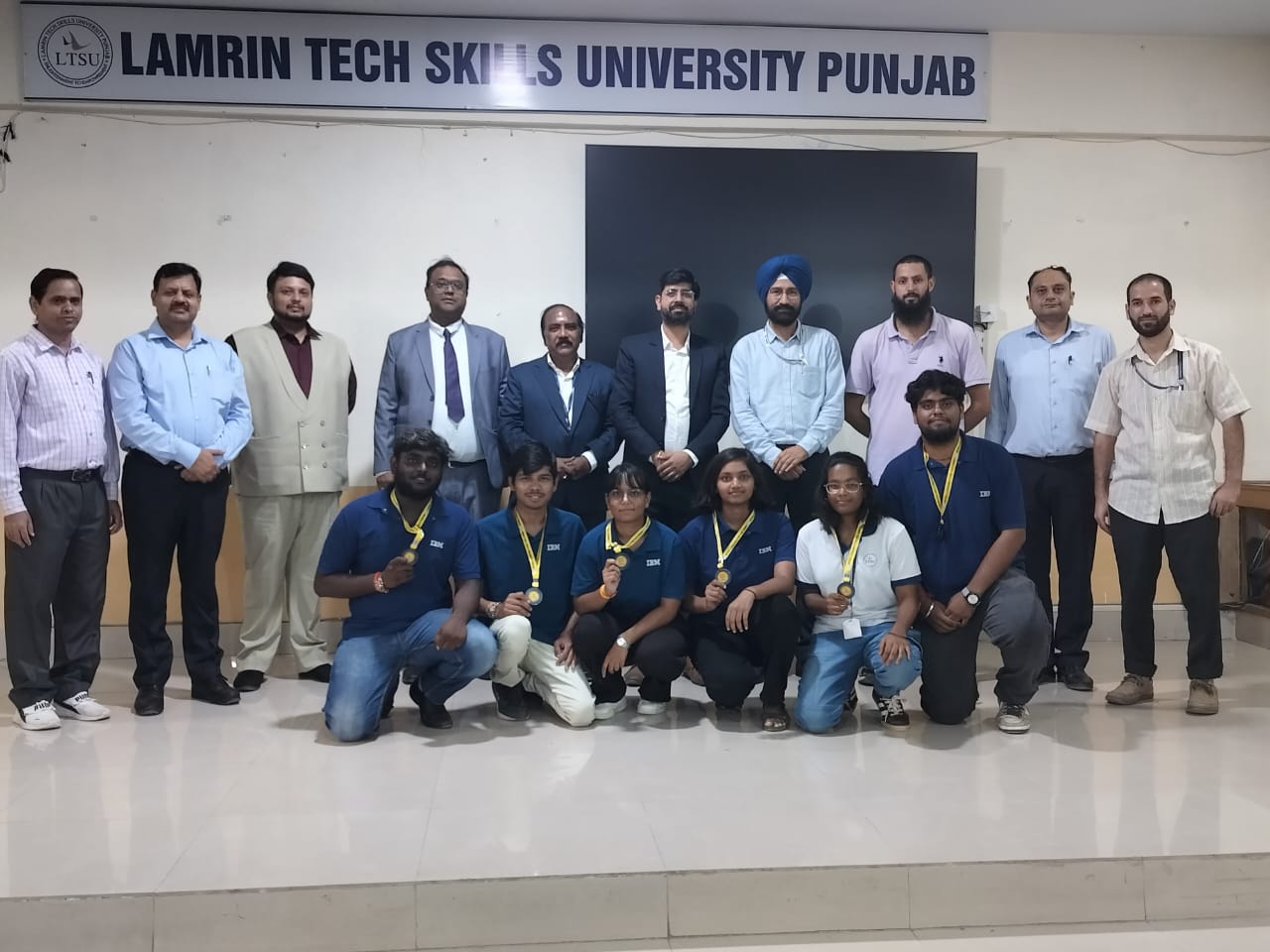
Team Path-Syncers presenting the project and receiving recognition for the achievement.
What I Learned from the Experience
Personally, this experience strengthened several skills that go beyond coding. The first was problem decomposition: large, real-world problems become approachable when they are broken into clear components and priorities. The second was teamwork: a good technical idea becomes much stronger when every team member contributes from their own perspective and the team can make decisions quickly. The third was communication: being able to explain why a system matters is just as important as being able to explain how it works.
The experience also reinforced my interest in building data-driven and intelligent systems. Transportation is a particularly interesting domain because it generates continuous operational data and has a direct impact on everyday life. The Kochi Metro project showed me how concepts from software engineering, data management, analytics and intelligent decision support can come together in a single solution.
Beyond the Hackathon: Where the Idea Can Go Next
Although the internal hackathon prototype was created within a limited timeframe, the underlying idea has significant scope for future development. A production-grade version could evolve toward richer real-time operational monitoring, predictive maintenance, historical analytics, anomaly detection, intelligent alerts and deeper integration with transportation data sources. Such capabilities could help move the system from passive monitoring toward proactive decision support.
The most exciting part of a project like this is that the prototype is not the destination. It is the starting point. The hackathon gave us a structured environment to validate the idea, receive feedback and understand what it would take to move from a student project toward a system that could eventually support real operational workflows.
A Milestone for Team Path-Syncers
Looking back, the 15 September 2025 internal hackathon stands out as one of those experiences where learning, competition and achievement came together. We started with a problem statement and an idea. We ended with a working concept, a stronger understanding of product development, valuable feedback from experienced evaluators and a 2nd Runner-Up position.
For me, the biggest takeaway is simple: innovation is not only about creating something new. It is about understanding a problem deeply, using technology thoughtfully and working with people who are willing to challenge and improve the idea. The Kochi Metro project gave us the opportunity to practice exactly that.
I am grateful to my teammates, mentors, faculty members and everyone at Lamrin Tech Skills University Punjab who made the event possible. The achievement belongs to the entire team, and the experience has become an important part of my journey as an engineering student and as someone who wants to build practical, data-driven technology for real-world problems.
Social Links & References
If you want to read more about this event, check out the official posts:
Event details referenced in this article include the 15 September 2025 Engineers' Day celebration, the Ideathon-cum-Smart India Hackathon Internal Hackathon, participation by 45 teams, and the published result listing Team Path-Syncers as the third-place team.